
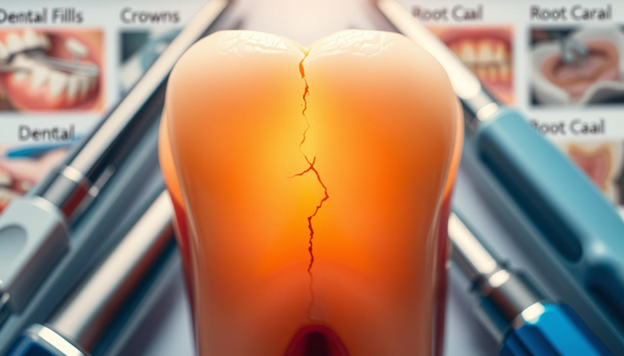
It’s a common phenomenon: you’re going about your daily routine when suddenly, you bite down and feel a strange sensation in your tooth. You run your tongue over it, and your heart sinks as you realize it’s cracked. But here’s the thing – you don’t feel any pain. No ache, no throbbing, no discomfort of any kind. It’s as if your tooth is saying, “Hey, I’ve got a problem, but don’t worry about it.” Don’t fall for it. A cracked tooth, regardless of whether it hurts or not, is a serious issue that demands attention. The crack is a way for bacteria to enter and create problems. This can lead to infections, abscesses, or even result in a root canal or tooth loss. In fact, some of the most severe dental problems arise from unchecked cracked teeth. Don’t take chances. If you think your tooth cracked in half with no pain, visit a dentist ASAP. Your tooth and health depend on it.
Can a Tooth Crack Without Causing Pain?
Yes, it’s absolutely possible. The reason lies in the structure of your tooth.
Each tooth has three layers:
- Enamel: the outer shell.
- Dentin: the middle layer.
- Pulp: the soft inner core with nerves and blood vessels.
When a crack only affects the enamel or part of the dentin, it may not trigger any nerve responses—hence, no pain.
A common situation is when the tooth is cracked in half but still attached. In such cases, the break may look dramatic but might not have reached deep enough to cause sensitivity or discomfort—yet. Yet, that doesn’t mean the crack is harmless.
In some cases, tiny cracks in the tooth enamel, known as “craze lines,” can remain painless for a while, giving a false sense of security. But these harmless lines can quietly turn into bigger issues over time, especially in molars. Chewing creates strong pressure on teeth, much like a vice. This force can slowly widen cracks. Then, bacteria can move deeper into the tooth. This can lead to tooth decay, sensitivity, and potentially, more severe issues, like an abscess or even tooth loss, if left untreated.
Why a Painless Crack Can Be Dangerous
When there’s no pain, people delay treatment. This gives bacteria time to enter the crack and reach the dentin or pulp. Even without symptoms, the tooth can slowly deteriorate from the inside.
As the crack deepens:
- The pulp may become inflamed or infected (pulpitis).
- You may eventually develop pulp necrosis, where the inner tissue dies silently.
- An abscess may form at the root, often going unnoticed until severe swelling or a bad taste signals infection.
- In some cases, the crack spreads down to the root, making the tooth non-restorable.
Should a Cracked Tooth Be Pulled?
Not necessarily. The need to extract a cracked tooth depends on the crack’s depth and whether the pulp is affected. Dentists typically prefer to save the natural tooth whenever possible. So, does a cracked tooth need to be pulled?
Here are the common treatment paths:
- Dental bonding is ideal for small cracks near the surface.
- A dental crown can protect a tooth with moderate damage and prevent further stress.
- A root canal may be needed if the crack reaches the pulp but the tooth is still salvageable.
- Extraction is a last resort. It is used only when the crack goes below the gumline or splits the root completely.
Each case is different, so professional evaluation is essential.
How to Fix a Cracked Tooth Naturally – Is It Possible?
Many people search for natural remedies, especially if the tooth isn’t causing pain. While you can’t “heal” a cracked tooth naturally, you can take some steps to manage symptoms and prevent worsening until you see a dentist.
- Saltwater rinses help reduce bacteria and inflammation around the crack.
- Clove oil provides mild numbing for sensitivity if it develops.
- Avoid chewing on the affected side, especially hard foods like ice or nuts.
- Turmeric paste has anti-inflammatory properties but should only be used topically and temporarily.
These remedies do not seal or repair cracks. They may ease symptoms, but only a dental procedure can properly restore structure and function.
When Should You See a Dentist?
Even if your cracked tooth causes no pain, an early dental evaluation is critical. You should visit a dentist immediately if:
- You can visibly see a crack running through the tooth.
- The tooth feels sharp or rough to your tongue.
- You develop sensitivity to hot, cold, or pressure.
- There is any swelling or redness around the gum near the cracked tooth.
- You feel like the crack is growing over time or the tooth is shifting.
Delaying treatment increases the chances that you’ll need more invasive, costly procedures later on.
How Dentists Diagnose and Treat Cracked Teeth
Dentists often use tools like dental X-rays or transillumination (a special light to see cracks) to examine the extent of the damage. If the crack is small and detected early, treatment is usually straightforward. If the crack reaches the pulp or goes below the gumline, you might need a more complex restoration or even an extraction.
Modern treatments like crowns, veneers, and dental implants provide lasting solutions. They restore your smile and help keep your jaw aligned and functional.
Can You Prevent Cracked Teeth in the Future?
Absolutely. Here are a few dentist-recommended habits to reduce your risk:
- Avoid chewing on hard objects like ice, pens, or unpopped popcorn kernels.
- Wear a mouthguard if you grind your teeth (bruxism) or play contact sports.
- Treat cavities early to prevent weakened tooth structure.
- Get regular dental checkups to catch early cracks before they become severe.
Teeth, like bones, weaken with age or repeated stress. Early detection and smart prevention go a long way.
Conclusion: No Pain ≠ No Problem
A tooth cracked in half, despite being pain-free, is a serious issue. Even in the absence of symptoms, the integrity of your tooth is compromised. This can lead to rapid deterioration if not addressed. Cracks let bacteria enter deeper tissues. This increases the risk of infections, nerve damage, or even losing the tooth. Regular dental check-ups are essential to observe and manage such concerns effectively.
The safest option is to get a professional evaluation. Acting early can change a simple crown into a painful extraction. Don’t wait for pain to force your decision—take action now to preserve your smile.